
One stop supply of solid organic waste equipment
Renzhuang, National Highway 310, Xingyang City, Henan Province
Kitchen Waste Solid-Liquid Separation Equipment for Efficient, Sustainable, and Intelligent Food Waste Management
2026-02-27

With the rapid development of urban life, catering services, food processing industries, hotels, schools, hospitals, and large-scale canteens, the amount of kitchen waste generated every day is increasing dramatically. Traditional disposal methods such as mixed collection, manual sorting, simple storage, and direct transportation to landfills or incineration plants often lead to secondary pollution, unpleasant odors, high transportation costs, and inefficient resource utilization. Under stricter environmental regulations and growing awareness of sustainable development, enterprises and public institutions are urgently seeking more efficient, economical, and environmentally friendly waste treatment solutions. Kitchen waste solid-liquid separation equipment has emerged as a key technological innovation that transforms conventional waste management into a systematic, intelligent, and resource-oriented process, helping users achieve waste reduction, harmless treatment, and recycling at the source.
Kitchen waste solid-liquid separation equipment is designed to mechanically separate organic waste into solid residues and liquid components through crushing, squeezing, filtration, and dehydration processes. The equipment usually consists of a feeding system, crushing unit, screw extrusion module, filtration screen, drainage system, collection containers, and an intelligent control panel. Kitchen waste such as vegetable residues, fruit peels, leftover food, meat scraps, and soup residues is first fed into the machine. After preliminary crushing, the waste enters the extrusion chamber, where strong mechanical pressure separates water and oil from solid matter. The liquid part flows into designated tanks for further treatment, while the solid residue is discharged with reduced moisture content, making it easier to transport, compost, ferment, or recycle. This integrated structure ensures stable operation, continuous processing, and high separation efficiency, even under heavy workloads.
One of the most important advantages of kitchen waste solid-liquid separation equipment is its high processing capacity and stable performance. Modern equipment is designed with wear-resistant materials, precision-machined components, and optimized screw structures, allowing it to handle large volumes of waste for long periods without frequent maintenance. Whether used in small restaurants or large central kitchens, the equipment can be customized according to daily waste output, ensuring optimal efficiency and cost control. At the same time, the automated control system enables one-button start, overload protection, fault alarms, and real-time monitoring, reducing dependence on manual labor and improving operational safety.
Another major advantage lies in its outstanding dehydration and separation efficiency. By significantly reducing the moisture content of solid waste, the equipment decreases the overall weight and volume of garbage. This directly lowers transportation frequency and disposal fees, helping users save considerable operational costs. The separated liquid, which contains organic matter and oil, can be further processed through oil-water separation, anaerobic digestion, or wastewater treatment systems, creating opportunities for biogas production, fertilizer manufacturing, or energy recovery. In this way, kitchen waste is no longer a burden but becomes a valuable secondary resource.
From an environmental perspective, kitchen waste solid-liquid separation equipment plays a crucial role in pollution control and sanitation improvement. Mixed waste storage often leads to rapid fermentation, producing foul odors, leachate, and harmful microorganisms. These problems not only affect surrounding communities but also pose health risks to workers. By separating liquid and solid components at the source, the equipment effectively reduces odor emission, inhibits bacterial growth, and prevents leachate leakage. This helps maintain a clean, hygienic, and compliant working environment, especially in densely populated urban areas and food service centers.
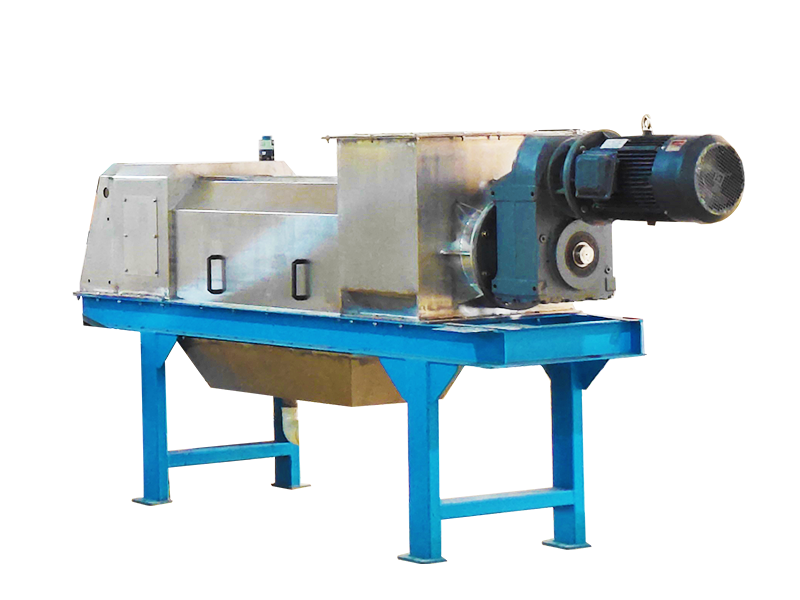
In terms of practical application, many catering chains, hotels, and municipal facilities have already achieved remarkable results through the use of this equipment. For example, a large hotel group installed kitchen waste solid-liquid separation equipment in its central kitchen, processing more than five tons of waste per day. After implementation, the volume of waste transported to disposal centers was reduced by nearly 40%, while disposal costs dropped by over 30%. The separated liquid was treated and reused for biogas production, supplying part of the kitchen’s energy demand. As a result, the hotel significantly improved its environmental image and operational efficiency.
In another case, a university campus introduced multiple separation units in its dining halls. Previously, waste collection required intensive labor and frequent transportation, causing high expenses and management difficulties. After adopting solid-liquid separation equipment, the campus realized centralized processing, standardized waste classification, and automated operation. Labor costs were reduced, sanitation conditions improved, and the separated organic solids were used for composting in campus landscaping projects, forming a closed-loop recycling system.
For food processing plants, the equipment also offers significant value. Production waste usually contains high moisture and complex organic components, making treatment difficult and costly. By installing solid-liquid separation systems at the production line end, factories can stabilize waste composition, reduce wastewater load, and simplify subsequent treatment processes. This not only ensures compliance with environmental regulations but also enhances corporate social responsibility and brand reputation.
From the customer’s perspective, kitchen waste solid-liquid separation equipment effectively solves several long-standing pain points. First, it addresses the problem of high disposal and transportation costs by reducing waste volume and weight. Second, it eliminates the inconvenience and inefficiency of manual sorting, improving labor productivity and management transparency. Third, it helps users cope with increasingly strict environmental policies, avoiding fines, penalties, and reputational risks. Fourth, it transforms waste into potential resources, creating additional economic value through recycling and energy recovery. Finally, it improves workplace hygiene, reduces odor complaints, and enhances overall service quality.
In terms of design and customization, modern manufacturers provide flexible solutions to meet diverse customer needs. Equipment can be tailored according to processing capacity, installation space, power supply conditions, and local regulations. Options such as stainless steel housing, corrosion-resistant coatings, noise reduction systems, and remote monitoring modules further enhance durability, comfort, and management convenience. Professional technical support, training services, and after-sales maintenance also ensure long-term stable operation and customer satisfaction.
Looking to the future, kitchen waste solid-liquid separation equipment will continue to evolve toward greater intelligence, automation, and integration. With the application of Internet of Things technology, big data analysis, and artificial intelligence, future systems will be able to optimize operating parameters automatically, predict maintenance needs, and connect seamlessly with waste management platforms. This will enable more efficient resource allocation and smarter environmental governance, contributing to the construction of green cities and circular economies.
In conclusion, kitchen waste solid-liquid separation equipment represents a comprehensive, reliable, and forward-looking solution for modern food waste management. By combining advanced mechanical design, intelligent control, and sustainable concepts, it helps users reduce costs, improve efficiency, comply with regulations, and enhance environmental performance. Whether for restaurants, hotels, institutions, factories, or municipal projects, this equipment provides a solid foundation for achieving cleaner production, responsible operation, and long-term development. Investing in kitchen waste solid-liquid separation equipment is not only a practical business decision but also a meaningful contribution to environmental protection and social sustainability.
Related Content
Contact Us
Address:
Ren Zhuang, 310 National Highway, Xingyang City, Henan Province
ZhenHua Packing Machinery
Contact:
Mr. Zhang
ZhenHua Packing Machinery
Telephone:
ZhenHua Packing Machinery
Wechat:
+86 15617562688
ZhenHua Packing Machinery
E-mail:
zzfuya2026@163.com
ZhenHua Packing Machinery

Professional manufacturer of black soldier fly breeding equipment
Our goal is to improve quality and value every customer.
ZhenHua Packing Machinery
Address:
Ren Zhuang, 310 National Highway, Xingyang City, Henan Province
ZhenHua Packing Machinery
Contacts:
Mr. Zhang
ZhenHua Packing Machinery
Mobile phone:
ZhenHua Packing Machinery
Telephone:
ZhenHua Packing Machinery
Wechat:
ZhenHua Packing Machinery
Whatsapp:
ZhenHua Packing Machinery
E-mail:
ZhenHua Packing Machinery
Website Sharing
online message
We will contact you within one working day. Please pay attention to your email.
Telephone:86-0371-64656398
Mobile phone:86-13976314306
Wechat:86-15617562688
Whatsapp:8615617562688
E-mail:fuyahb@gmail.com
E-mail:zzfuya2026@163.com